
Do All Green Teas Taste the Same?
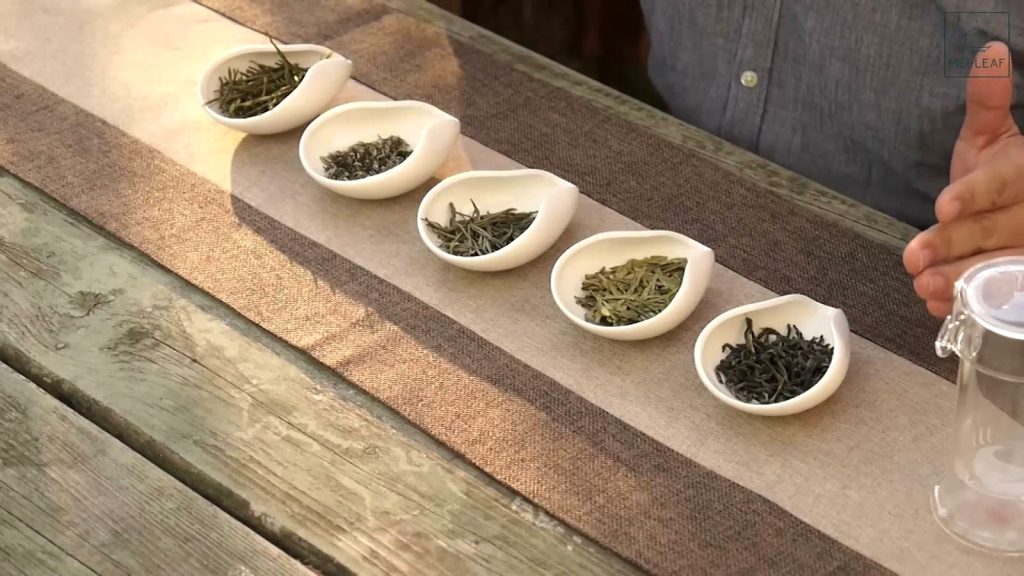
In this tasting, five famous Chinese green teas are compared to answer a simple question: do all green teas taste the same? The goal is not only to spot the differences in a blind tasting, but also to give clear pointers so people can learn how to distinguish between these classic Chinese green teas.
The focus here is narrowed to Chinese green tea only, even though Japanese and Korean teas are said to taste even more different. These five teas are all 2018 Chinese green teas, batch curated for 2018, and they come from neighboring tea-producing areas in eastern China.
Why “Green Tea” Is Not Enough
Many people say they like green tea, or that they do not like green tea, without knowing which type they have tried. The point made here is that a packet labeled only “green tea” gives very little information. It does not tell you about terroir, type, season, cultivar, or other details that matter.
This is compared to a bottle labeled only “white wine.” That would not tell you whether it is a buttery Chardonnay, a mineral-rich Chablis, or a sweet-sour Alsatian Riesling. In the same way, tea cannot be reduced to one broad category if you want to understand how it tastes.
The Five Chinese Green Teas
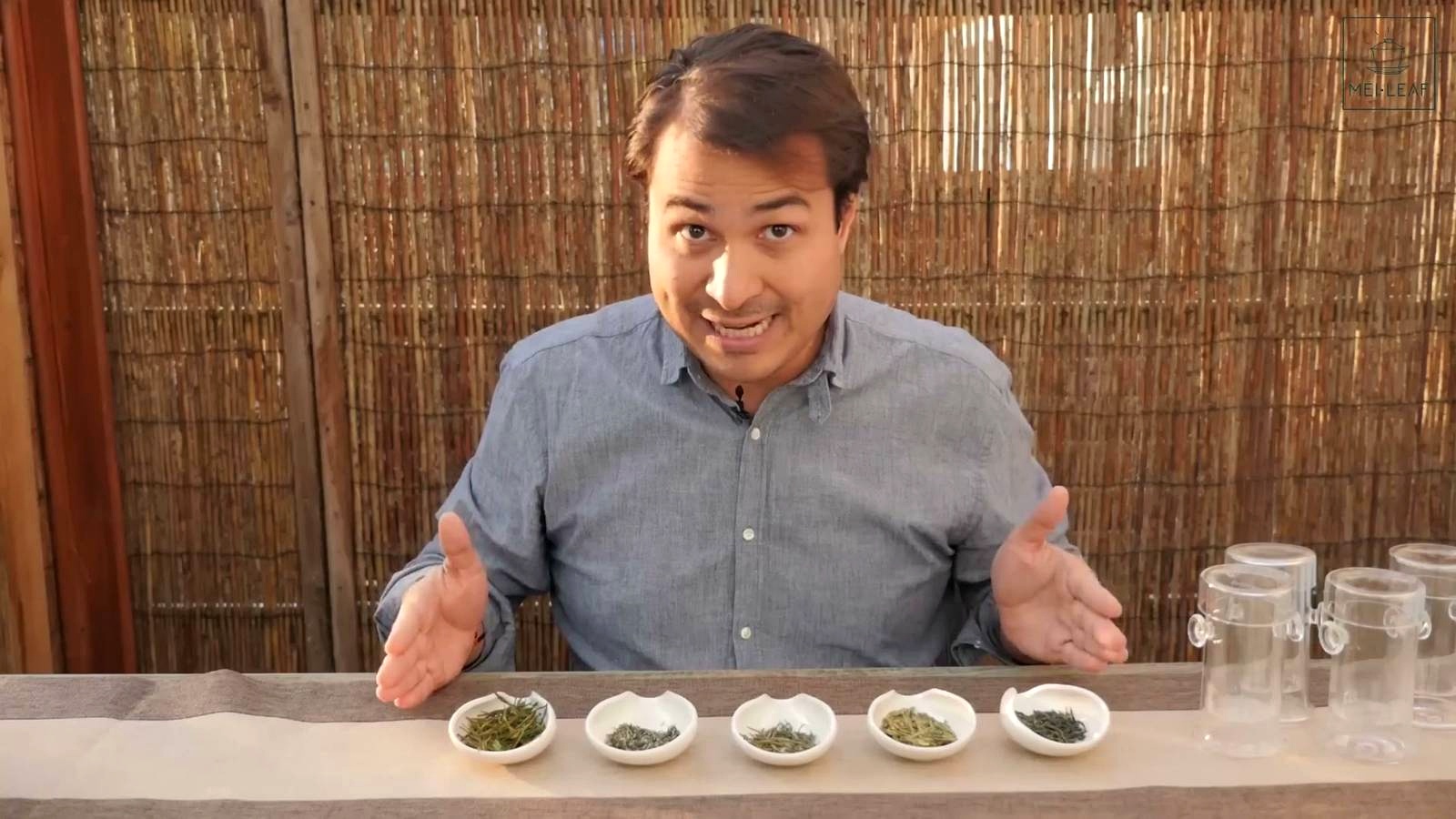
The tasting includes five 2018 Chinese green teas:
- Naked Spring, also known as Qi Hua Long Ding
- Jade Sword
- Green Coil, also known as Bi Luo Chun
- Imperial Green, a Long Jing or Dragon Well tea
- Melon Seed Green, also known as Lu An Gua Pian
Origin and Regions

All five teas come from China. The discussion focuses on the eastern side of the country, especially three main provinces that sit next to each other and produce stellar green teas: Zhejiang province, Anhui province, and Jiangsu province.
- Naked Spring is a classic Zhejiang green tea.
- Jade Sword comes from the Anji area of Zhejiang province.
- Green Coil comes from Jiangsu province.
- Imperial Green is a Long Jing from Zhejiang province.
- Melon Seed Green comes from the Lu An area of Anhui province.
The Blind Tasting Setup
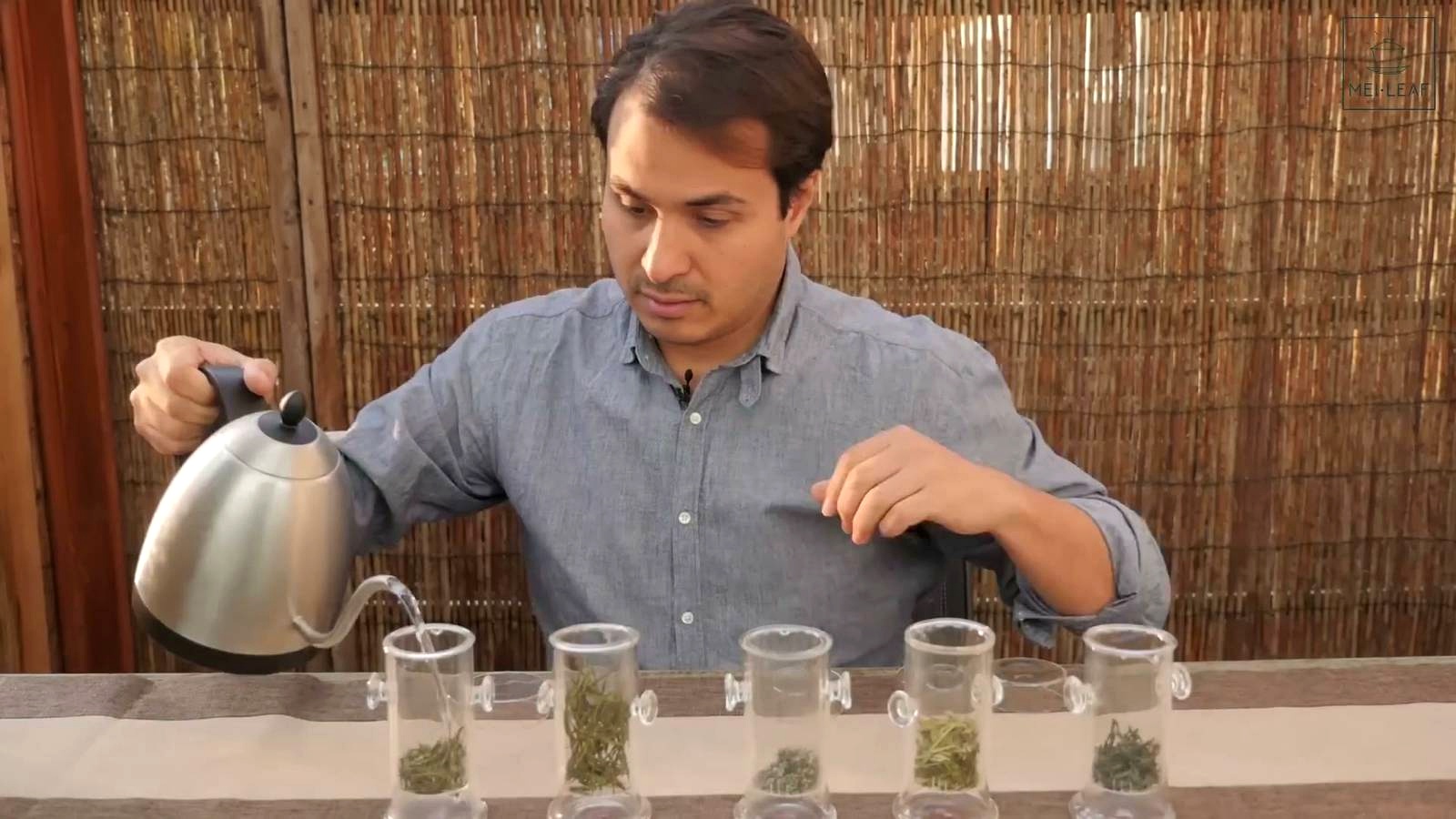
All five teas were brewed for around the same amount of time, about 30 to 40 seconds, using 80 degree water, or 175 Fahrenheit, with 3.5 grams of leaf. It was noted that some of these teas are better suited to different parameters, but the brewing was evened out for the purpose of testing whether the differences could still be tasted clearly.
Blind Tasting Results
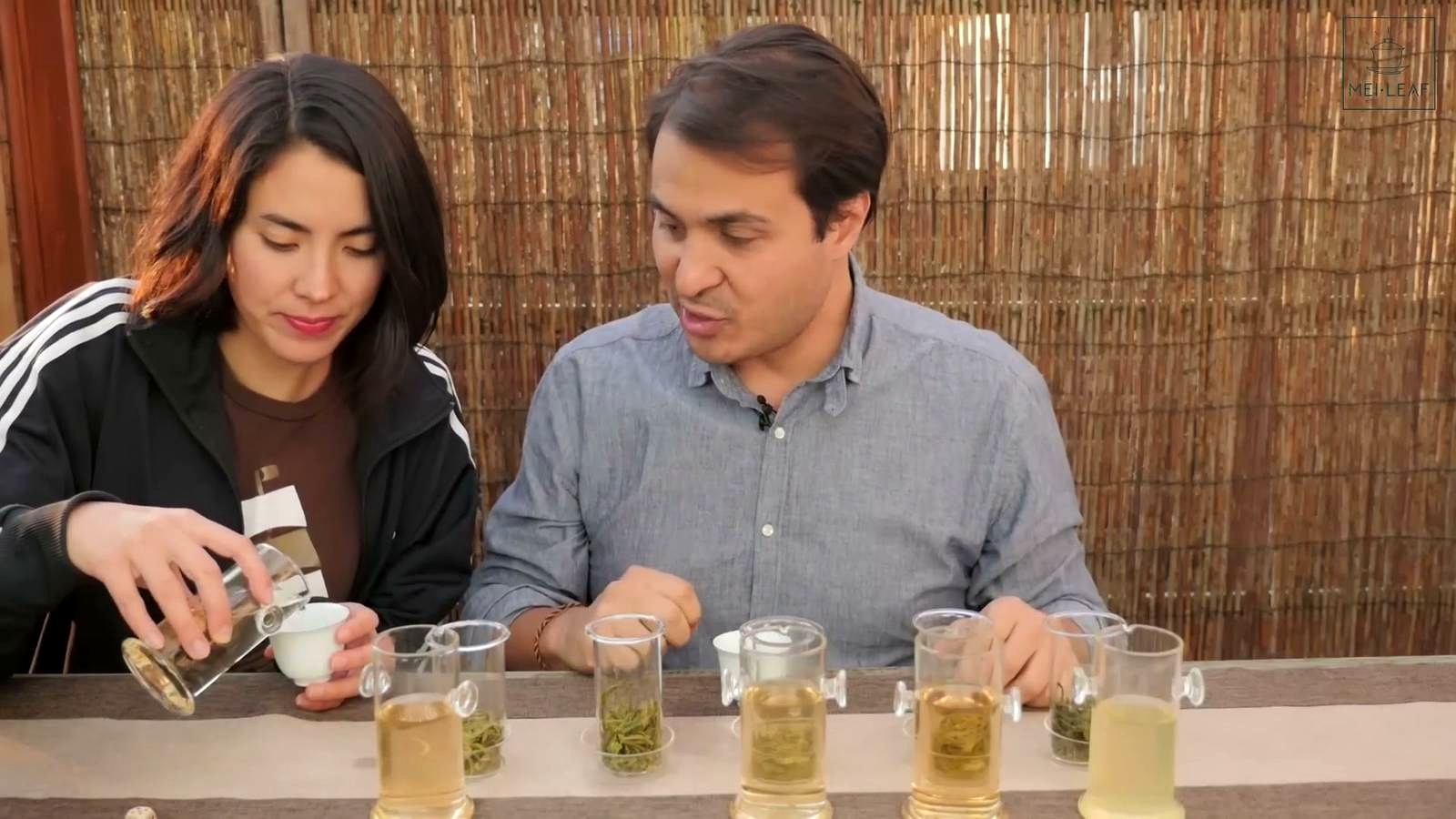
The teas were tasted blind, one by one, and each was identified correctly. The order guessed was:
- Melon Seed Green
- Jade Sword
- Imperial Green
- Naked Spring
- Green Coil
The conclusion was that there are “worlds of difference” between these teas, even though they come from relatively the same part of the world and even relatively similar areas in China’s east coast.
How Each Tea Tastes
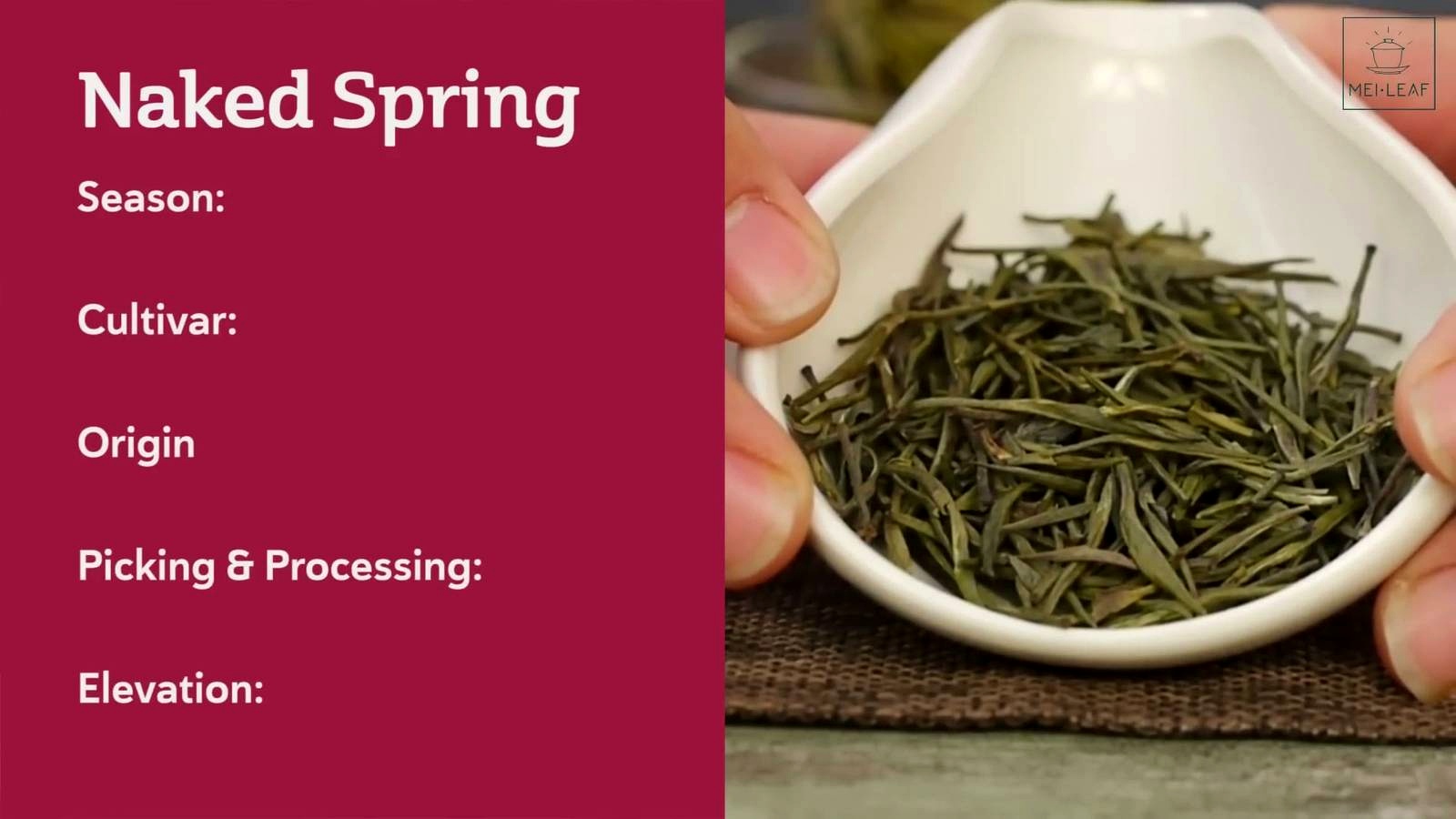
Naked Spring
Naked Spring, also known as Qi Hua Long Ding, was picked on 25 March 2018. It is an early spring picking, pre-Qing Ming. It is from the Zhu Ke Hong Zhong variety and comes from Qi Hua, Zhejiang, China, near the intersection close to the borders with Anhui and Jiangsu. The picking is mostly buds, with a few young leaves, and the elevation is 1100 meters.
Its flavor profile is described as raw spring, sappy, bright, and very verdant. It has a certain astringency associated with breaking sap from fresh leaves and chewing on them. Because of this rawness, it is said to be important to brew it at a relatively low temperature.
The tea was brewed with 80 degree water for about 20 seconds in a flute brewer. The liquor is described as a very light citrine yellow. In the cup, it gives floral notes, including jasmine, along with a clean, bright, raw taste. Other impressions include star fruit and even a fresh laundry smell.
Jade Sword
Jade Sword, also known as Anji Bai Cha, was also picked on 25 March 2018, around the same time as Naked Spring, and is also a pre-Qing Ming tea. Its cultivar is a white variety called Bai Ye Hao. It comes from Anji, Zhejiang province, China. The picking is a bud and one or two leaves, and the elevation is 1530 meters.
This tea is brewed slightly hotter, at 85 degrees or 185 Fahrenheit, because it is a white leaf variety and can take hotter water and longer brewing times. In flavor, it still has meadow-like freshness and floral notes, but with more depth than Naked Spring. The flowers are sweeter, and there is a little fruit, described as very light and gentle, like Asian pears. There is also a slight milkiness, specifically a light nut milkiness rather than anything dairy or heavy.
Green Coil
Green Coil, also known as Bi Luo Chun, was picked on 23 March 2018, another very early spring pre-Qing Ming picking. It is from the Dong Ting Qun Ti variety and comes from Dong Ting Mountain in Jiangsu province, China, next to Tai Hu Lake. The picking is extremely fine, with very furry buds and a bud and one leaf standard. Its elevation is 250 meters.
This tea is presented as a premium and very well-known Chinese green tea, but with the warning that quality matters greatly. The flavor profile is said to depend heavily on quality, and much of what is available is described as not very good at all.
In taste, Green Coil amplifies vegetal notes and has strong savoriness. It is described as the closest Chinese green tea here to a Japanese green tea flavor profile, while still being different. Tasting notes include wok fire, cooked spinach, and a protein-like umami savoriness more often associated with meats or seaweeds. It is deep, satisfying, and rich, with a strong finish and mouth texture coming from the fine picking.
Imperial Green
Imperial Green is a Long Jing, also known as Dragon Well. This batch was picked on 19 March 2018, making it a super early picking. It is from the Long Jing number 43 cultivar and comes from Xinchang in Zhejiang province, China. It is a bud and one or two leaves, and the elevation is 600 meters.
It is also noted that this tea is not sourced from Shi Hu, even though that area is very famous for Long Jing, because it is believed that for the price point, better teas can be found outside that famous area.
The tea is brewed with 80 degree water. The aim with Long Jing is to preserve fresh notes while also bringing out nuttiness. The classic profile is chestnut, especially green nut notes, along with the taste of heat from pan baking.
In the cup, Imperial Green is rich in nuttiness with a very clean finish. It starts with toasty notes such as hazelnuts, chestnuts, and toasted wheat. There is also some umami, though less than in Green Coil. The finish is bright, clean, juicy, and includes green, freshly cut grass, and juicier notes.
Melon Seed Green
Melon Seed Green, also known as Lu An Gua Pian, is a new tea in the 2018 collection. It had been tasted for ten years without being selected before this batch was chosen. This tea comes from the end of April 2018, making it later-picked than the others. The cultivar is the Qiqun cultivar, and it comes from the Lu An area of Anhui province, China.
Its picking standard is very different from typical green teas. Instead of buds and very young leaves, Lu An Gua Pian uses only leaves, and those leaves are intentionally allowed to mature. No buds are picked, and no stem is included. The leaf is picked without stem, which is why the wet leaves can look ripped at the edge.
This later picking is presented as necessary for quality. It is said that you cannot get high-quality pre-Qing Ming Lu An Gua Pian, because the leaf needs time to mature. After the leaves are picked, the bud is left behind and later becomes another leaf, and that second picking is said by some to be as good as or even better than the first.
The processing is also distinctive. After picking, the leaves go through withering to develop flavor, then are baked in three separate woks at different temperatures. The process starts hot for kill-green and then goes cooler to shape the leaves. After that, the leaves are charcoal dried. A final step called “pulling of the fire” flash roasts the tea by repeatedly bringing large bamboo baskets of leaves over a very hot fire for a second at a time, mixing, and repeating the process, sometimes upwards of sixty times.
This is described as a very skilled process that can go wrong. A poor result produces a smoked taste, which is not wanted. The desired result is warmth, roast, and extra dimension, but not smokiness.
Melon Seed Green is brewed at 90 degrees because the leaves are larger and more mature. The mature leaf is said to develop more proteins and sugars, bringing sweeter and warmer notes.
In flavor, this tea is immediately roasted, but in a very different way from Long Jing. Instead of nutty toasted wheat notes, it is more like dark baked potato skin. It is sweeter, with a finish built around biscuity warmth, shortbread notes, and sweeter fruit such as strawberries. A tasting note given for the batch is “strawberry shortcake.” It also has a quenching minerality and a journey from baked, flash-roasted notes to biscuity warmth and a strawberry finish.
Main Differences at a Glance
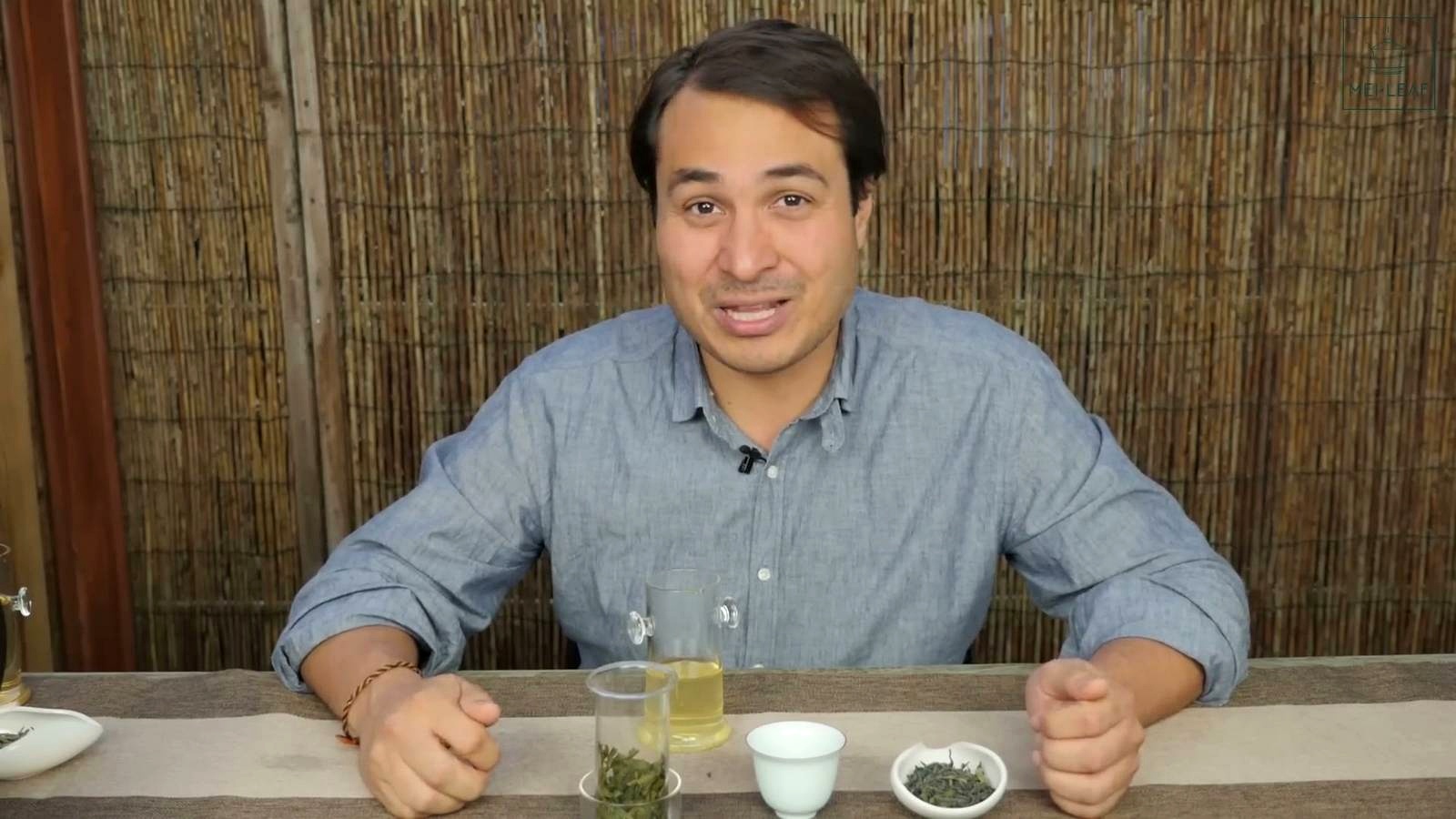
Naked Spring:
raw spring, sappy, bright, verdant, floral, jasmine, star fruit, clean and astringent.
Jade Sword:
floral and meadow-like, but deeper, sweeter flowers, very light fruit like Asian pears, and light nut milkiness.
Green Coil:
vegetal, savory, wok fire, cooked spinach, strong umami, deep and satisfying.
Imperial Green:
nutty, chestnut-like, hazelnut, toasted wheat, some umami, bright juicy finish.
Melon Seed Green:
warm roasted notes, dark baked potato skin, biscuity warmth, shortbread, strawberries, minerality.
Conclusion
This comparison shows clearly that not all green tea tastes the same. Even within a narrow selection of five Chinese green teas from relatively nearby regions, the differences in flavor, picking style, cultivar, processing, and brewing approach are substantial.
The purpose of the tasting is to help people recognize those differences and choose the tea that suits them best. For experienced tea drinkers this may already be obvious, but for anyone getting into loose leaf tea, these examples offer clear and practical reference points.
FAQ
Do all green teas taste the same?
No. The tasting concludes that there are worlds of difference between these teas, even though they all come from China and from relatively similar areas.
Which five Chinese green teas were compared?
Naked Spring, Jade Sword, Green Coil, Imperial Green, and Melon Seed Green.
Were the teas really identified in a blind tasting?
Yes. All five were identified correctly in the blind tasting.
Why is a label that only says “green tea” not enough?
Because it does not give information about terroir, type, season, cultivar, or other details that help explain the tea’s character.
Which tea is described as closest to a Japanese green tea flavor profile?
Green Coil is described as probably the closest Chinese green tea in this group to a Japanese green tea flavor profile.
What makes Lu An Gua Pian unusual?
It uses only matured leaves, with no buds and no stems, is picked later than the others, and goes through a distinctive processing method including withering, wok baking, charcoal drying, and flash roasting.
Video Reference

Soccer lover, risk-taker, band member, Vignelli fan and front-end designer. Doing at the junction of art and mathematics to craft meaningful ideas that endure. I work with Fortune 500 companies and startups.